Ronseal Decking Oil Review: Worth It? We Ran the Numbers
Spring is deck season. Before you reach for a tin of Ronseal, we calculated what it actually costs to treat a standard UK garden deck — and whether it's worth doing yourself.
It's April. The deck has spent five months getting rained on, walked over in boots, and generally ignored. Now it's grey, slightly rough, and starting to show the kind of wear that turns into splinters and rot if you leave it another season.
The standard fix is a tin of decking oil. Ronseal's Ultimate Protection is the one most people reach for — it's consistently at the top of Amazon UK's Movers & Shakers for DIY, 8,500+ reviews, and available for under £30 for a 2.5L tin. The question is whether it actually does what it says, and how many tins you actually need.
Check current price on Amazon UK → (affiliate link)
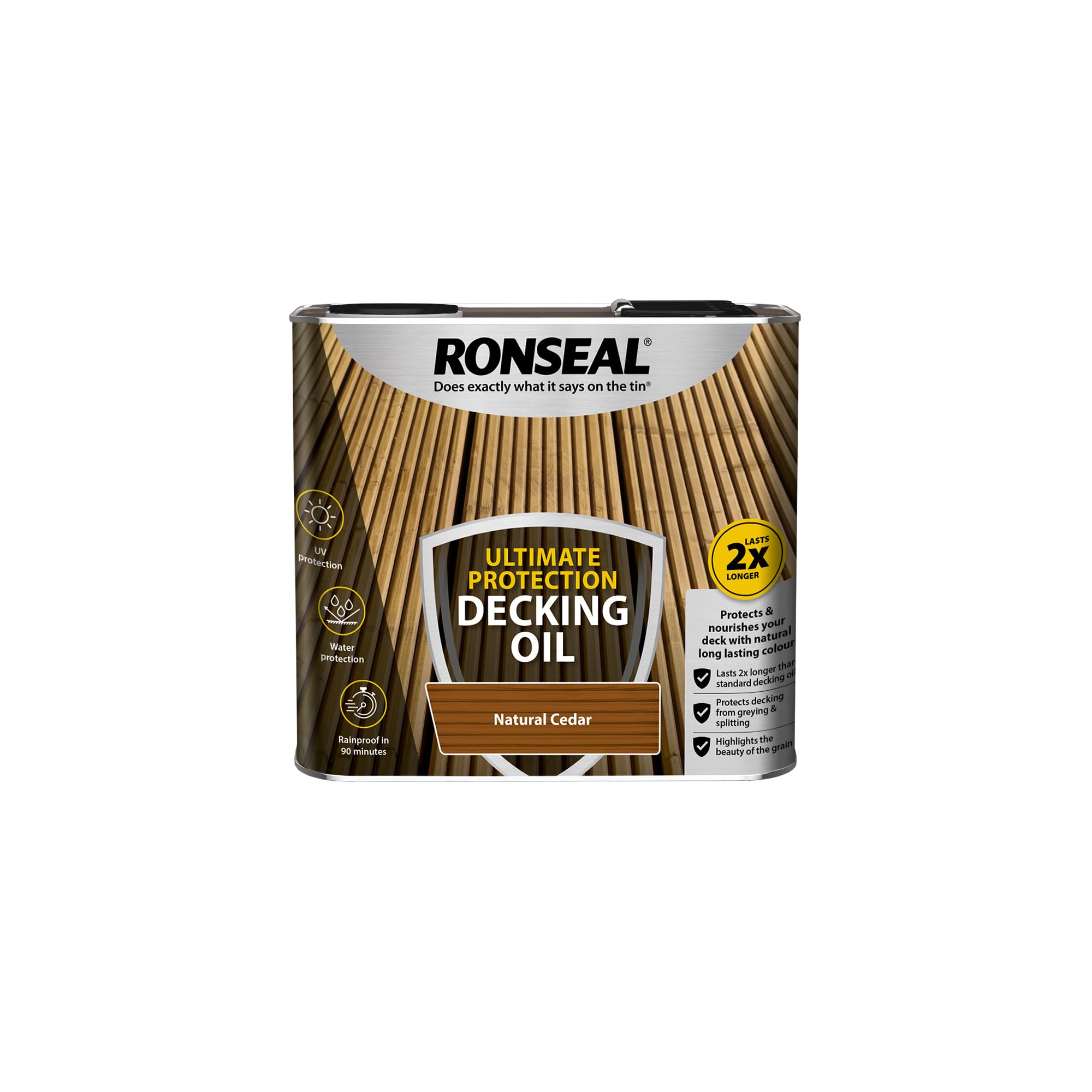
What You Get
Ronseal Ultimate Protection Decking Oil is an oil-based treatment designed to penetrate the wood grain rather than sit on top of it. The key differences from a decking stain or varnish:
- Penetrating formula — soaks into the wood rather than forming a surface film, so it doesn't peel or crack over time
- UV protection — slows down the grey weathering process that happens on untreated timber
- Water repellence — causes water to bead rather than soak in, which reduces swelling, warping, and the mould that follows
- Slip resistance — the Natural Cedar variant (and others) includes a micro-texture that improves grip when wet
It comes in several colours (Natural Cedar, Dark Brown, Natural, Jacobean Walnut, Teak). The natural and cedar options show minimal colour change on lighter timber; the darker variants are a genuine tonal shift.
One thing worth knowing: this is an oil treatment, not a deck paint. If your deck is already heavily painted or varnished, the oil won't penetrate — you'd need to strip it first, which is a different project entirely.

The Numbers: How Much Do You Actually Need?
This is where most people underestimate the cost. A single 2.5L tin sounds like plenty. It usually isn't.
Ronseal's own coverage figure is approximately 5m² per litre on rough, weathered, or porous timber (the kind most UK garden decks become after a season or two). That's 12–13m² per 2.5L tin.
Use our Paint Calculator to get your exact figure — enter your deck dimensions and it tells you how many litres you need and how many tins to buy.
For reference, here's what the numbers look like for typical UK deck sizes:
| Deck size | Area | Tins per coat | Cost per coat |
|---|---|---|---|
| Small (3m × 3m) | 9m² | 1 tin | £28.56 |
| Medium (4m × 4m) | 16m² | 2 tins | £57.12 |
| Large (5m × 4m) | 20m² | 2 tins | £57.12 |
| Large (6m × 4m) | 24m² | 2 tins | £57.12 |
First application on weathered or stripped timber: two coats. Double the figures above.
A medium 16m² deck treated twice in year one costs around £114 in materials. After that, one coat per year at £57 is the maintenance budget.
Where this beats hiring a pro: A professional deck treatment service in the UK typically charges £3–6 per m² for labour, plus materials. On a 16m² deck, that's £48–96 in labour on top of similar material costs. DIY saves you the labour charge if you're prepared to spend a few hours on a dry weekend.
Application: What They Don't Tell You
The biggest mistake people make is applying decking oil to wet or dirty timber. Two things to do first:
- Clean the deck — either with a deck cleaner (Ronseal sells one, around £8) or a pressure washer on a low setting. Oil applied over algae or dirt seals the grime in and looks terrible within a few weeks.
- Wait for dry conditions — the deck surface needs to be dry, and the weather forecast should show no rain for at least 4–6 hours after application.
Application itself is straightforward: pour into a tray, use a wide brush or a decking pad applicator (much faster for large areas), work with the grain, and don't overload the brush. The Natural Cedar variant has a working time of around 15–20 minutes before it starts to tack up, so don't try to do a huge area in one go.
Drying time: light foot traffic in 4–6 hours, full cure in 48 hours. Plan for a weekend.

What to Check Before You Commit
Is your deck actually timber? Composite decking (the plastic/wood fibre type increasingly common in UK gardens) does not absorb oil. The product will sit on the surface and peel off quickly. Check what your deck is made from before buying.
How weathered is it? New treated timber should wait 6–12 months before being oiled — it needs to weather slightly for the pores to open up. Very old, grey, deeply weathered timber may benefit from a deck reviver first, which is a separate product that lifts the grey colour and opens the grain before oiling.
Is there existing paint or varnish on it? Oil and surface coatings are incompatible. If there's a film-forming finish on your deck, you'll need to strip or sand it before this product will work properly.
Worth It?
Yes, with caveats. At £28.56 for a 2.5L tin, Ronseal Ultimate Protection Decking Oil is good value for the protection it provides. The 8,500+ reviews at 4.6 stars reflect a product that genuinely works when applied correctly to appropriate timber.
The caveats: you need to be honest about how many tins your deck actually requires (use the Paint Calculator), the preparation work is non-negotiable, and composite decking is a dealbreaker.
If you want a low-effort way to extend the life of a timber deck by several years for under £60 in materials, this is the product to buy. If your deck is composite, skip it entirely.
Check current price on Amazon UK → (affiliate link)
Disclaimer: This article is for informational purposes only. Product coverage and results may vary depending on timber type, condition, and application method. Always follow the manufacturer's instructions.
This article contains an affiliate link. If you buy through it, we earn a small commission at no extra cost to you. We only link to products we'd actually recommend.